
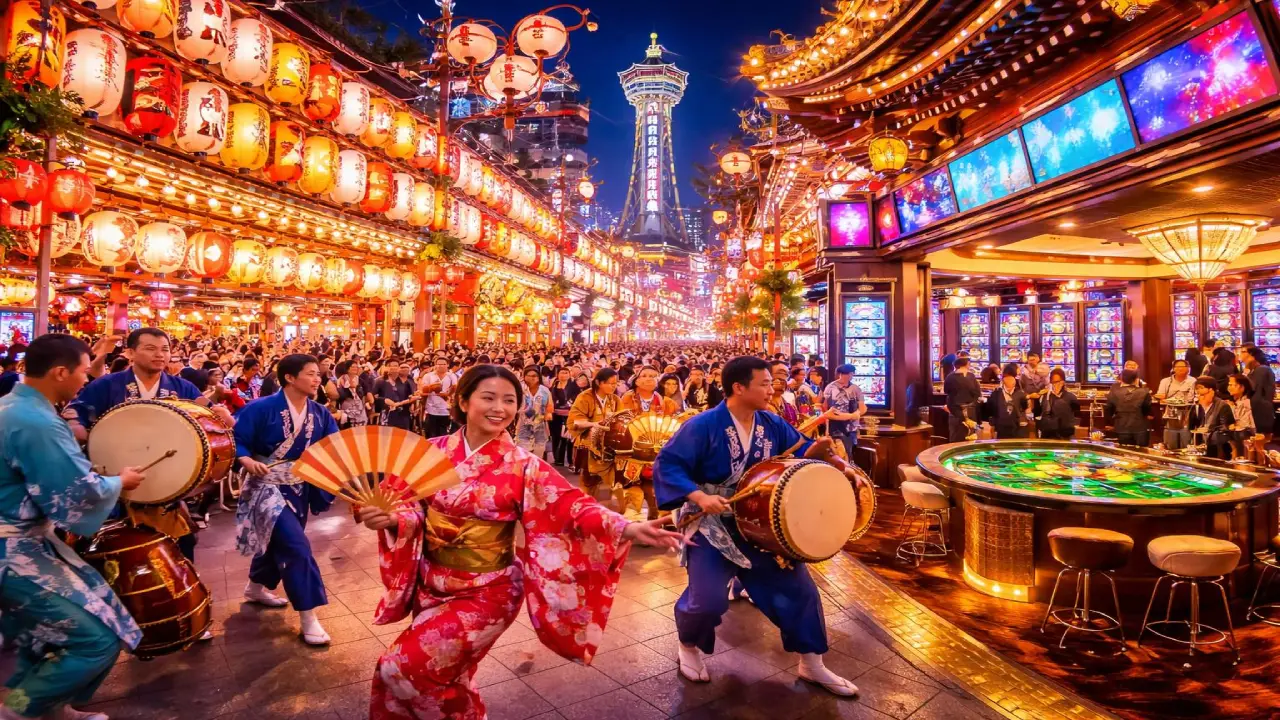
Osaka has always been a city that knows how to celebrate. For more than a thousand years, its streets have erupted with colour, music, fire, and the collective energy of millions of people gathering to honour tradition while embracing spectacle. From the legendary Tenjin Matsuri with its river processions and fireworks illuminating the night sky to the raw, adrenaline-fuelled Kishiwada Danjiri Festival where teams race four-tonne wooden floats through narrow streets at breakneck speed, Osaka’s festival culture is unlike anything else in the world. It is bold, sensory, communal, and deeply theatrical. And it is precisely these qualities that are now shaping the future of modern casino entertainment, not just in Japan but across Asia and the global gaming industry.
The connection between Osaka’s matsuri traditions and the world of casino entertainment might not be immediately obvious, but once you look beneath the surface, the parallels are striking. Both are built around the art of creating immersive experiences that engage every sense simultaneously. Both blend ritual with excitement, tradition with innovation, and individual participation with collective energy. As Japan prepares to open its first integrated casino resort on Yumeshima Island in Osaka Bay by 2030, the influence of the city’s festival DNA on the design, atmosphere, and philosophy of modern gaming entertainment has never been more visible or more relevant.
This article explores how Osaka’s centuries-old festival traditions are inspiring a new generation of casino experiences, from the design of physical resort spaces to the mechanics of online gaming platforms that bring that same spirit of celebration to players around the world.
The Soul of Osaka’s Festival Traditions
To understand how Osaka’s culture influences modern entertainment, you first need to appreciate what makes its festivals so extraordinary. Osaka is home to some of Japan’s most iconic matsuri, events that are not merely performances for spectators but living expressions of community identity, spiritual devotion, and artistic excellence that have been refined over centuries.
The Tenjin Matsuri, held every July at the Osaka Tenmangu Shrine, is ranked as one of Japan’s three greatest festivals alongside Kyoto’s Gion Matsuri and Tokyo’s Kanda Matsuri. Its origins stretch back to 951 AD, making it over a thousand years old. The festival unfolds across two days of ceremonies, street processions, traditional music and dance performances, and culminates in a breathtaking boat parade on the Okawa River where more than 100 illuminated vessels glide across the water beneath 3,000 fireworks lighting up the summer sky. The sheer scale of sensory orchestration, combining water, fire, sound, movement, and human emotion into a unified experience, is something that the world’s most ambitious entertainment designers study and aspire to recreate.
The Kishiwada Danjiri Matsuri, celebrated every September, brings a completely different energy. Thirty-five neighbourhood teams race enormous wooden floats through the streets of Kishiwada at dangerous speeds, navigating sharp corners in a display of strength, coordination, and fearlessness that has been a tradition for over 300 years. The atmosphere is electric, the crowd participation is intense, and the element of genuine risk creates an excitement that no staged performance can replicate. This raw, unscripted energy is precisely the quality that modern entertainment venues are trying to capture.
| Osaka Festival | Origin | Key Features | Emotional Experience |
|---|---|---|---|
| Tenjin Matsuri | 951 AD | River boat parade, 3,000 fireworks, shrine processions | Awe, spiritual reverence, visual spectacle |
| Kishiwada Danjiri Matsuri | Over 300 years | Four-tonne float racing through streets at high speed | Adrenaline, communal excitement, risk |
| Sumiyoshi Matsuri | Ancient origins | Mikoshi processions, traditional dances at Sumiyoshi Taisha | Tranquility, cultural connection, ritual beauty |
| Ebessan (Toka Ebisu) | Centuries old | Millions visit Imamiya Ebisu Shrine for prosperity blessings | Hope, festivity, fortune-seeking |
| Osaka Hikari Renaissance | Modern | Winter illumination festival across Nakanoshima area | Wonder, romance, visual immersion |
| Shitennoji Wasso | Revived tradition | International cultural parade celebrating Osaka’s historic ties | Diversity, cultural pride, celebration |
Beyond individual festivals, what makes Osaka unique is its fundamental identity as a city of entertainment and commerce. Historically known as the “Kitchen of Japan” for its role as the nation’s trading hub, Osaka has always been a place where business, pleasure, and cultural expression intersect naturally. The city’s famous philosophy of “kuidaore,” which roughly translates to eating until you drop, reflects an attitude toward sensory indulgence and joyful excess that permeates every aspect of its culture. This same spirit is embedded in the DNA of the entertainment experiences being built in the city today.
How Festival Design Principles Shape Modern Casino Spaces
The physical design of modern integrated resorts and casino spaces increasingly draws from the same principles that make Osaka’s festivals so captivating. Festival designers have understood for centuries that the most memorable experiences are not passive. They surround you, move through you, and make you feel like a participant rather than a spectator. The most forward-thinking casino architects and experience designers are applying these exact principles to create spaces that feel alive, dynamic, and emotionally engaging.
The MGM Osaka Integrated Resort, Japan’s first casino resort currently under construction on Yumeshima Island, is a direct expression of this philosophy. The $8.9 billion project is being designed not merely as a gambling venue but as a multi-sensory cultural destination that blends traditional Japanese aesthetics with cutting-edge entertainment technology. The design team, led by Gensler in collaboration with prominent Japanese firms, is creating spaces that transition from high-energy gaming zones to tranquil, nature-connected hospitality areas, mirroring the way Osaka’s festivals shift between intense excitement and moments of contemplative beauty.
The resort will include the MUSUBI Hotel with specialised studios for traditional Japanese activities such as tea ceremonies, directly integrating cultural experiences into the entertainment offering. Tourist attractions inspired by Japanese culture will sit alongside the 470-table casino and 6,400 electronic gaming machines, creating an environment where cultural immersion and gaming excitement coexist rather than compete.
| Festival Design Principle | How It Works in Matsuri | How It Translates to Casino Entertainment |
|---|---|---|
| Multi-sensory immersion | Sound, light, fire, water, and movement combined | Lighting design, soundscapes, visual theatrics on gaming floors |
| Ritual and progression | Ceremonies build toward climactic moments | Game mechanics that escalate tension toward big payouts |
| Community participation | Entire neighbourhoods join the celebration | Social gaming features, live dealer interaction, shared jackpots |
| Spectacle and awe | Fireworks, massive floats, river processions | Architectural grandeur, themed environments, show programming |
| Cultural storytelling | Each festival carries historical and spiritual meaning | Themed slot games, culturally inspired table game variants |
| Risk and reward | Danjiri racing involves genuine danger and glory | The fundamental excitement loop at the heart of all casino games |
| Seasonal anticipation | Festivals build excitement across weeks and months | Tournament calendars, seasonal promotions, limited-time events |

The Influence on Online Casino and Gaming Platforms
The impact of festival culture on casino entertainment extends far beyond physical spaces. Online gaming platforms have increasingly adopted design philosophies rooted in the same principles that make festivals irresistible. The most successful platforms in Asia understand that players are not just looking for a mathematical transaction. They want to feel something. They want spectacle, rhythm, anticipation, celebration, and the sense that they are part of something larger than a solitary screen experience.
This is why themed slot games inspired by Asian festivals and mythology have become some of the most popular titles in the industry. Games built around dragon festivals, lantern celebrations, fortune deities, and seasonal celebrations tap into the same emotional currents that draw millions of people to matsuri every year. The visual language of fireworks, gold, flowing water, and ceremonial processions translates beautifully to the digital screen, creating an aesthetic that feels culturally resonant rather than generic.
Live dealer casino experiences have also been profoundly influenced by the festival concept of communal participation. The best live dealer platforms create an atmosphere that mirrors the shared energy of a festival crowd. A dealer who engages with the table, celebrates wins with genuine enthusiasm, and creates a sense of occasion around each hand or spin is channelling the same principle that makes a matsuri host so compelling. Players are not just gambling. They are participating in a social ritual that has its own rhythm, its own peaks and valleys, and its own moments of collective joy.
Game show formats like Crazy Time, Dream Catcher, and Mega Wheel owe a clear debt to the festival entertainment tradition. These games are essentially digital matsuri stages where a charismatic host guides participants through escalating rounds of chance and spectacle. The spinning wheels, the bonus rounds, the crowd reactions, and the theatrical presentation all echo the structure of a festival performance where anticipation builds toward a climactic moment of revelation.
| Festival-Inspired Online Gaming Element | Cultural Root | How It Appears in Modern Games |
|---|---|---|
| Fortune and prosperity themes | Ebessan festival and shrine visits for good luck | Lucky Fortune, God of Wealth, and prosperity-themed slots |
| Fireworks and light spectacle | Tenjin Matsuri’s 3,000-firework display | Fireworks animations on big wins and bonus triggers |
| Communal celebration of winners | Neighbourhood pride in danjiri team victories | Shared jackpot celebrations and leaderboard tournaments |
| Seasonal and limited-time events | Festivals tied to specific dates and seasons | Diwali specials, New Year events, seasonal tournament calendars |
| Progressive escalation | Festival ceremonies building toward climactic finale | Multi-stage bonus rounds with increasing multipliers |
| Ritual and superstition | Shrine offerings and deity worship for fortune | Lucky charm features, ritual-based game mechanics |
| Theatrical hosts and performers | Festival musicians, dancers, and parade leaders | Live dealer personalities and game show hosts |
What Indian Players Can Learn From Japan’s Festival-Gaming Connection
For Indian players, the connection between festival culture and gaming entertainment will feel instantly familiar. India shares with Japan a rich tradition of festivals that are not just celebrations but deeply embedded cultural experiences that shape identity, community bonds, and emotional life. Diwali, Holi, Navratri, Pongal, Durga Puja, and countless regional festivals create the same sense of collective joy, sensory immersion, and fortune-seeking that defines Osaka’s matsuri culture.
The parallels between Diwali and the Ebessan festival in Osaka are particularly striking. Both revolve around themes of prosperity, fortune, and new beginnings. Both involve millions of people engaging in rituals designed to attract good luck and financial blessing. And both have inspired gaming experiences that tap into those same emotional desires. When an Indian player sits down at a Diwali-themed Teen Patti table or claims a festival bonus during the IPL season, they are participating in the same cultural-entertainment fusion that Japan is now building a $8.9 billion resort around.
| Cultural Parallel | Osaka Festival Tradition | Indian Festival Tradition | Gaming Industry Expression |
|---|---|---|---|
| Fortune and prosperity | Ebessan shrine visits for wealth blessings | Diwali Lakshmi Puja for financial prosperity | Fortune-themed slots and festival bonus promotions |
| Light and spectacle | Tenjin Matsuri fireworks over Okawa River | Diwali fireworks and diya illumination | Fireworks animations and illuminated game interfaces |
| Communal celebration | Neighbourhood danjiri teams competing together | Community Garba and Dandiya Raas during Navratri | Social gaming, multiplayer tournaments, shared jackpots |
| Seasonal anticipation | Summer matsuri season building excitement for months | Cricket season and IPL building national anticipation | Tournament calendars and seasonal promotional campaigns |
| Food and indulgence | Osaka’s kuidaore street food culture at festivals | Festival feasting traditions across every Indian celebration | VIP entertainment packages and loyalty reward experiences |
| Card games and chance | Traditional Japanese games played during festivals | Teen Patti and Rummy during Diwali gatherings | Digital versions of cultural card games on modern platforms |
This cultural resonance is not accidental. The most successful gaming platforms in the Indian market have recognised that entertainment experiences rooted in cultural identity are far more powerful than generic international offerings. When a platform offers Diwali-themed promotions, Teen Patti tables with festival atmospheres, or cricket betting markets that capture the excitement of an IPL final, it is applying the same principle that Osaka’s festival culture has perfected over a thousand years: create an experience that feels personally and culturally meaningful, and people will return to it again and again.
The Future of Festival-Inspired Casino Entertainment
The fusion of traditional festival culture and modern casino entertainment is still in its early stages, and the most exciting developments are yet to come. As the MGM Osaka resort approaches its 2030 opening, it will serve as a global showcase for how deeply cultural traditions can be integrated into world-class entertainment experiences. The resort’s emphasis on Japanese cultural showcases alongside gaming, its inclusion of traditional activity studios, and its architectural philosophy of blending high energy with tranquility will set a new standard that other destinations across Asia will inevitably follow.
Virtual and augmented reality technologies are opening new possibilities for bringing festival atmospheres into digital gaming environments. Imagine a VR casino floor that transports you to the banks of the Okawa River during Tenjin Matsuri, with fireworks exploding overhead as you play at a virtual table. Or an AR-enhanced mobile gaming experience that overlays festival visuals and sounds onto your surroundings during Diwali or Holi season. These technologies are not science fiction. They are in active development, and the cultural content that will make them compelling is drawn directly from the festival traditions that cities like Osaka have been perfecting for centuries.
For the gaming industry, the lesson from Osaka’s festival culture is clear and profound. The most powerful entertainment experiences are not built on technology alone. They are built on human emotion, cultural meaning, and the timeless desire to participate in something extraordinary. Festivals have understood this since the beginning of civilisation. The casino industry is only now catching up, and the cities and platforms that embrace this truth most fully will define the next era of entertainment.